Emergency Gadgets Every Family Should Own in South Africa
Load shedding, crime, water outages, and the occasional Highveld storm — South African families deal with more disruptions than most households anywhere in the world. The good news is that a handful of practical, affordable purchases can make every one of those situations significantly more manageable. Emergency gadgets every family should own aren’t luxury items or paranoid prepper gear — they’re the sensible toolkit that separates households that cope well from those that scramble every time something goes wrong.
You don’t need to spend tens of thousands of Rands to be prepared. The right emergency gadgets cost a few hundred Rands each, take minutes to set up, and pay for themselves the first time you actually need them.
Why Emergency Gadgets Every Family Should Own Matter More in SA Than Anywhere Else
South Africa’s combination of load shedding, high crime rates, unreliable water supply in some areas, and extreme weather makes household emergency preparedness a practical necessity rather than an optional extra. Emergency gadgets every family should own address these specific local realities — not generic overseas advice about blizzards or tornadoes that simply doesn’t apply here.
The average South African household now experiences load shedding daily. That single reality alone justifies building a basic emergency gadget kit, and once you’re buying for load shedding, it makes sense to extend the same thinking to security, communication, and basic first aid preparedness at the same time.
The Essential Emergency Gadgets Every South African Family Needs
These are the categories that matter most for South African conditions — practical, proven, and genuinely useful in the disruptions our families face regularly.
1. Rechargeable Emergency Lights
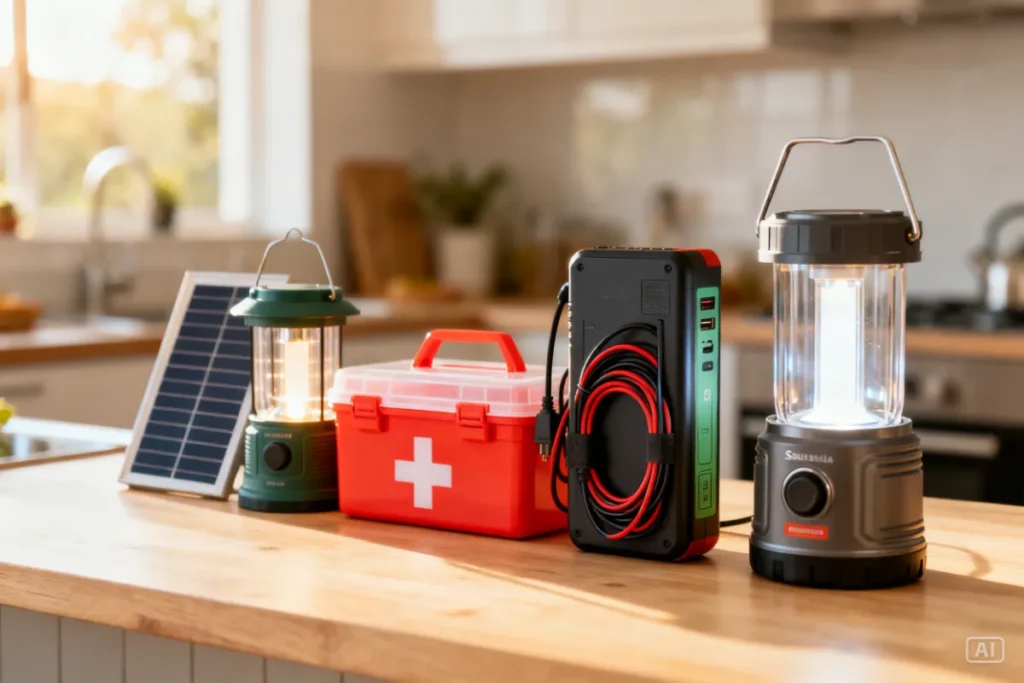
Darkness is the most immediate problem load shedding creates, and candles are a fire risk that no family with children should be relying on. A combination of an auto-switch plug-in emergency light for the passage and a portable rechargeable lantern for the lounge covers the basics at under R400 total. The plug-in unit activates automatically — no fumbling in the dark required.
Best Rechargeable Lights for Load Shedding
2. A High-Capacity Power Bank
Your phone is your most critical emergency tool — it’s your communication lifeline, your torch, your navigation, and your way to contact help. A power bank with at least 20,000mAh keeps your phone and a family member’s device charged through multiple load shedding slots without needing a wall socket. It also powers small devices like your router if you have the right cable. Don’t buy the cheapest option here — this is not the place to save R50.
Best Power Banks for Load Shedding
3. A Mini UPS for Your Router
Staying connected during load shedding isn’t just about convenience — it’s about safety and livelihood for the millions of South Africans working from home or running small businesses. A mini UPS keeps your WiFi router and fibre ONT powered through any load shedding slot automatically, with zero interruption to your connection. For the full setup guide, see our article on mini UPS for WiFi routers.
4. A Solar Rechargeable Lantern
A solar lantern is the backup to your backup. It charges from sunlight rather than the grid, which means it’s useful even during extended multi-day outages when your rechargeable lights have been depleted and the power hasn’t come back. Leave it on a north-facing windowsill during the day and it’s ready for the evening — every evening, regardless of what Eskom is doing.
5. A Basic First Aid Kit
Injuries during load shedding are more common than most families expect — cuts from cooking in poor light, burns from candles, falls on dark staircases. A properly stocked first aid kit in an accessible location is non-negotiable. This doesn’t need to be elaborate: wound dressings, antiseptic, bandages, pain medication, and a pair of gloves cover the vast majority of household emergencies.
How to Build Your Emergency Gadget Kit Without Overspending
The biggest mistake families make is trying to buy everything at once and then abandoning the project when the total cost feels overwhelming. A phased approach works far better for most South African household budgets.
Month 1 — Light and Power (Under R500)
Start with a rechargeable lantern and a plug-in auto-switch emergency light for the passage. Add a power bank if budget allows. These three items solve your most immediate daily load shedding problems and cost less than a single tank of petrol.
Month 2 — Connectivity and Backup (R400–R900)
Add a mini UPS for your router if you’re on fibre, and a solar lantern as a backup light source. By the end of month two, your home is genuinely well-equipped for daily load shedding.
Month 3 — Safety and Security (R300–R600)
Complete the kit with a quality first aid kit, a battery-powered or solar security light for the exterior, and any specific items relevant to your household — medication storage for family members with chronic conditions, for example.
This phased approach keeps monthly spend manageable while building toward a genuinely complete emergency preparedness setup.
Emergency Gadgets vs Everyday Gadgets — Understanding the Difference
Some gadgets serve double duty — useful every day and essential during emergencies. Others are pure emergency items that sit ready and waiting. Understanding the difference helps you prioritise your spending.
| Gadget | Everyday Use | Emergency Use | Priority |
|---|---|---|---|
| Rechargeable lantern | Reading light, outdoor use | Load shedding lighting | 🔴 High |
| Power bank | Daily device charging | Emergency communication | 🔴 High |
| Mini UPS | Continuous router backup | Load shedding connectivity | 🔴 High |
| Solar lantern | Outdoor/camping light | Extended outage backup | 🟡 Medium |
| First aid kit | Minor household injuries | Emergency medical response | 🔴 High |
| Solar security light | Nightly garden lighting | Security during blackouts | 🟡 Medium |
| Battery radio | Entertainment | Emergency news and alerts | 🟡 Medium |
The gadgets marked high priority are the ones to buy first — they earn their keep every single day, not just during emergencies.
How to Store and Maintain Your Emergency Gadgets
Buying the right gadgets is only half the job. A power bank that hasn’t been charged in six months, or an emergency light with a dead battery, is useless exactly when you need it most.
- Designate one central location for all emergency gadgets. A kitchen drawer, a shelf in the passage, or a dedicated box — every family member should know where it is without being told.
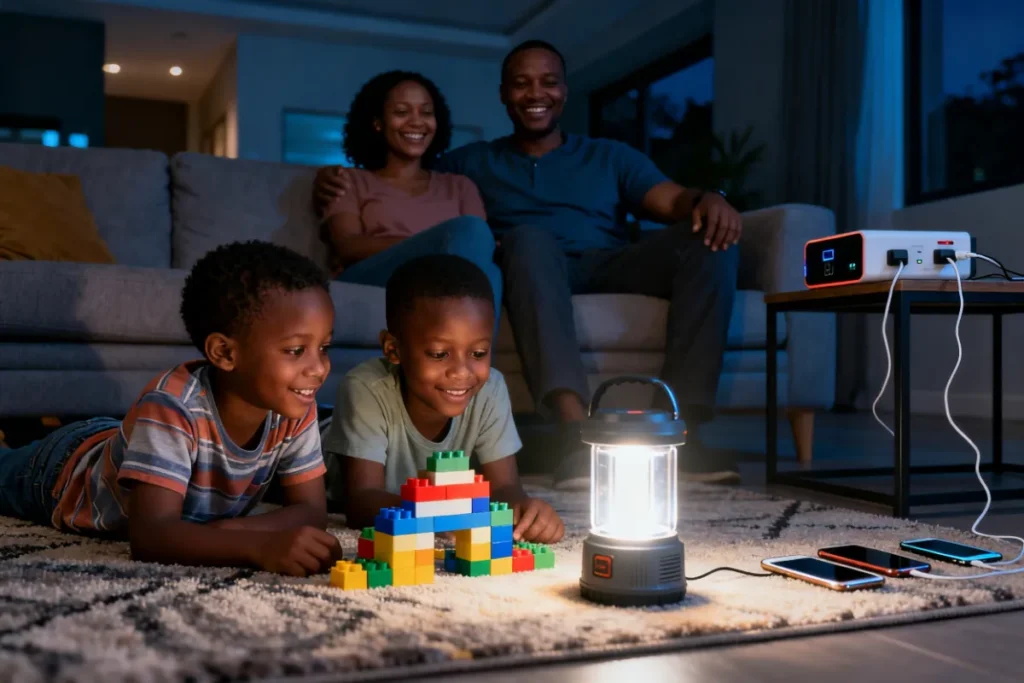
- Keep rechargeable items topped up. Plug-in emergency lights do this automatically. For power banks and portable lanterns, set a weekly reminder to check charge levels and top up if needed.
- Check your first aid kit every six months. Replace any expired medications or depleted supplies. Add any prescription medications your family regularly needs in an emergency card inside the kit.
- Test auto-switch emergency lights monthly. Switch off the mains briefly and confirm they activate. A faulty auto-switch unit that fails silently gives you false confidence.
- Clean solar panel surfaces weekly. Dust and grime reduce charging efficiency significantly. A quick wipe with a damp cloth keeps your solar gadgets performing at full capacity.
- Tell every family member where the kit is and how to use it. An emergency is not the time to give instructions. Do a five-minute walkthrough with your household so everyone knows the location and basics of each item.
For more on building a complete load shedding survival setup, the Ultimate Guide to Load Shedding Survival Gadgets covers every product category your household needs to stay comfortable, connected, and safe through South Africa’s power challenges.
Zack’s Verdict
Most South African families are one bad load shedding week away from realising they’re completely underprepared — and by then it’s too late to order online and wait for delivery. The emergency gadgets every family should own are not complicated or expensive. A lantern, a power bank, a mini UPS, a solar backup light, and a first aid kit covers ninety percent of what your household will actually face. The total cost for a well-equipped family emergency kit is under R1,500 if you buy smart — less than a weekend away. Stop putting it off. Buy one item this week, add another next month, and within three months your family will be genuinely prepared for whatever load shedding, crime, or Cape Town storms throw at you.
FAQ
Q: What are the most important emergency gadgets for South African families?
A: The highest priority items are a rechargeable emergency lantern, a high-capacity power bank, and a plug-in auto-switch emergency light for the passage. These three items solve the most common daily disruptions South African families face and cost under R500 combined.
Q: How much should a complete home emergency kit cost in South Africa?
A: A practical, well-equipped emergency kit covering lighting, power backup, connectivity, and basic first aid costs between R1,000 and R1,500 when built over two to three months. Buying everything at once is not necessary — start with the highest-priority items and add to the kit gradually.
Q: Should I have different emergency gadgets for load shedding vs other emergencies?
A: The best emergency gadgets serve both purposes. A rechargeable lantern is useful for load shedding and a power outage caused by a storm. A power bank helps during load shedding and when you’re stranded with a flat phone. Buy items that earn their keep daily and double as emergency tools — you’ll get far more value per Rand.
Q: How do I get my children used to emergency procedures during load shedding?
A: Make it routine rather than reactive. When load shedding hits, let children help switch on the lantern or hand out torches — involvement reduces anxiety. Keep a dedicated children’s light in each bedroom so they’re never in complete darkness. Consistent routines during predictable load shedding schedules take the fear out of blackouts quickly.
Q: Are there emergency gadgets specifically useful for elderly family members?
A: Yes. For elderly family members, prioritise auto-switch plug-in emergency lights in every room they use regularly — manual switching in the dark is a fall risk. A loud, simple battery-powered alarm or panic button is also worth considering. Avoid gadgets with complex charging or operating procedures.
Q: How often should I check and update my emergency kit?
A: A full review every six months is sensible — check battery health on all rechargeable items, replace expired first aid supplies, and assess whether your family’s needs have changed. A quick weekly check of charge levels on power banks and portable lanterns takes less than two minutes.
Q: Do I need a generator if I have the right emergency gadgets?
A: For most South African households, a well-chosen set of emergency gadgets eliminates the need for a generator entirely. Generators are noisy, expensive to run, require fuel storage, and need maintenance. A mini UPS, quality lanterns, and a high-capacity power bank handle the vast majority of what load shedding throws at a typical family — more quietly, more safely, and at a fraction of the ongoing cost.
Q: What’s the single most underrated emergency gadget for South African homes?
A: The plug-in auto-switch emergency light is consistently underestimated. It costs under R150, requires zero maintenance, activates automatically every single time the power cuts, and prevents the falls and injuries that happen when families navigate dark passages and staircases. It’s the lowest-cost, highest-impact emergency purchase most South African homes haven’t made yet.
Start Building Your Family’s Emergency Kit Today
You can’t control when Eskom cuts the power, when a storm knocks out the grid, or when something unexpected happens at home. What you can control is how prepared your family is when it does. The right emergency gadgets turn a stressful blackout into a manageable inconvenience — and that peace of mind is worth every Rand.
Browse the full range of emergency and load shedding gadgets at Zacks Bargains — practical products chosen for South African families, at prices that make sense.