Best Emergency Lights for South African Homes That Actually Deliver
Every South African household needs at least one reliable backup light — not a candle, not your phone torch, and definitely not hoping load shedding won’t hit at 7pm again. The best emergency lights for South African homes are purpose-built to charge from the grid when power is on and switch on automatically the moment Eskom cuts it. No fumbling in the dark, no wax dripping on the furniture, no flat phone batteries from using the torch app for three hours straight.
This guide cuts through the noise and tells you exactly what to look for, which types work best for different rooms, and how to get the most value from every Rand you spend.
What Makes the Best Emergency Lights for South African Homes Worth Buying?
The best emergency lights for South African homes need to do three things without compromise: charge reliably from the grid, switch on automatically when power cuts, and stay bright long enough to cover a full load shedding slot. A light that requires you to manually switch it on in a dark room, or one that dies after 90 minutes, isn’t solving the problem — it’s just a slightly better candle.
South Africa’s load shedding reality means these lights get used daily in many households. That level of use demands a product built with decent battery capacity, quality LEDs that don’t fade after a few months, and a charging circuit that handles repeated daily cycles without degrading too quickly.
The Different Types of Emergency Lights Available in SA
Not all emergency lights work the same way, and different types suit different rooms and situations. Understanding the options helps you spend your money in the right places.
Plug-In Emergency Lights
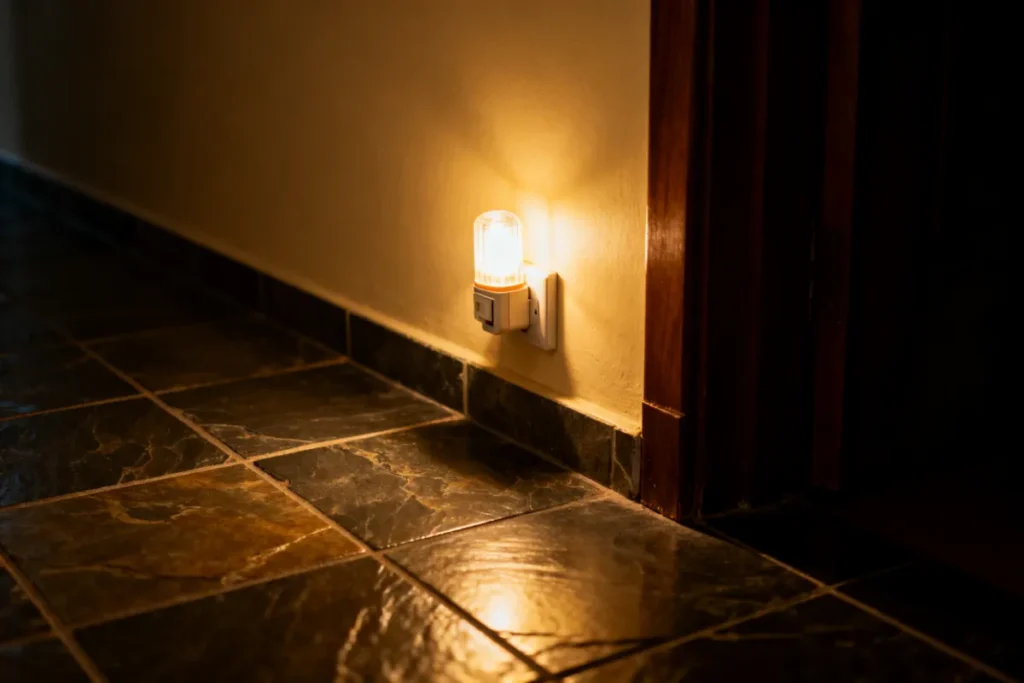
These plug directly into a wall socket, charge continuously, and switch on automatically when the power cuts. They’re the most convenient option for passages, bathrooms, and children’s rooms — places where you need instant light without thinking about it. Most give 3–5 hours of light and cost between R80 and R200.
Rechargeable Lanterns
Rechargeable lanterns charge via USB or a dedicated cable and are portable — you carry them from room to room as needed. They tend to have larger battery capacity than plug-in units, which means longer runtime, and they double as camping or outdoor lights. A quality lantern in the R200–R400 range will comfortably light a lounge or kitchen for a full load shedding slot.
Best Rechargeable Lights for Load Shedding
Rechargeable LED Work Lights
These are the bright, flat panel lights originally designed for workshops and garages but increasingly popular for home load shedding use. COB LED technology gives them excellent light output per watt — they’re often significantly brighter than decorative lanterns at a similar price point. Ideal for kitchens, home offices, and garages.
Solar Emergency Lights
Solar emergency lights charge from sunlight rather than the grid, making them genuinely independent of Eskom entirely. They’re slightly slower to charge than plug-in options but provide true backup capability even during extended outages. Best used as an outdoor security light or a supplementary indoor light rather than your primary room light.
How Long Should an Emergency Light Last Per Charge?
A quality emergency light should give you a minimum of 4 hours on a full charge at medium brightness — enough to cover most scheduled load shedding slots comfortably. Better units push to 6–8 hours on medium, which covers back-to-back Stage 4 slots without needing to recharge in between.
The runtime figures printed on packaging are almost always measured at the lowest brightness setting. Treat them as the maximum possible runtime and expect 50–60% of that figure at a usable brightness level. A light claiming 10 hours of runtime will realistically give you 5–6 hours at the brightness you’d actually use in a dark room.
Comparing the Best Emergency Lights for South African Homes
Before you spend anything, understand how the main options stack up against each other for real SA load shedding conditions.
| Feature | Plug-In Emergency Light | Rechargeable Lantern | COB LED Work Light | Solar Emergency Light |
|---|---|---|---|---|
| Auto-switches on at power cut | ✅ Yes | ❌ Manual | ❌ Manual | ❌ Manual |
| Portable between rooms | ❌ Fixed to socket | ✅ Yes | ✅ Yes | ⚠️ Cord dependent |
| Battery life (realistic) | ⚠️ 2–4 hours | ✅ 4–8 hours | ✅ 4–6 hours | ✅ 4–8 hours |
| Charges without grid power | ❌ No | ❌ No | ❌ No | ✅ Solar |
| Best room | Passage / bathroom | Lounge / bedroom | Kitchen / office | Outdoor / backup |
| Price range | R80–R200 | R180–R400 | R80–R150 | R180–R400 |
How to Choose the Right Emergency Light for Each Room in Your Home
Different rooms have different needs. A one-size-fits-all approach wastes money and leaves you with the wrong light in the wrong place.
- Passage and staircase: A plug-in emergency light that auto-switches on is essential here — this is a safety issue, not just a convenience one. Falling on dark stairs during load shedding is a real risk.
- Kitchen: You need bright, even light to cook safely. A COB LED work light or a high-lumen lantern on a flat surface works well. Avoid dim decorative lights in a space where you’re handling knives and hot appliances.
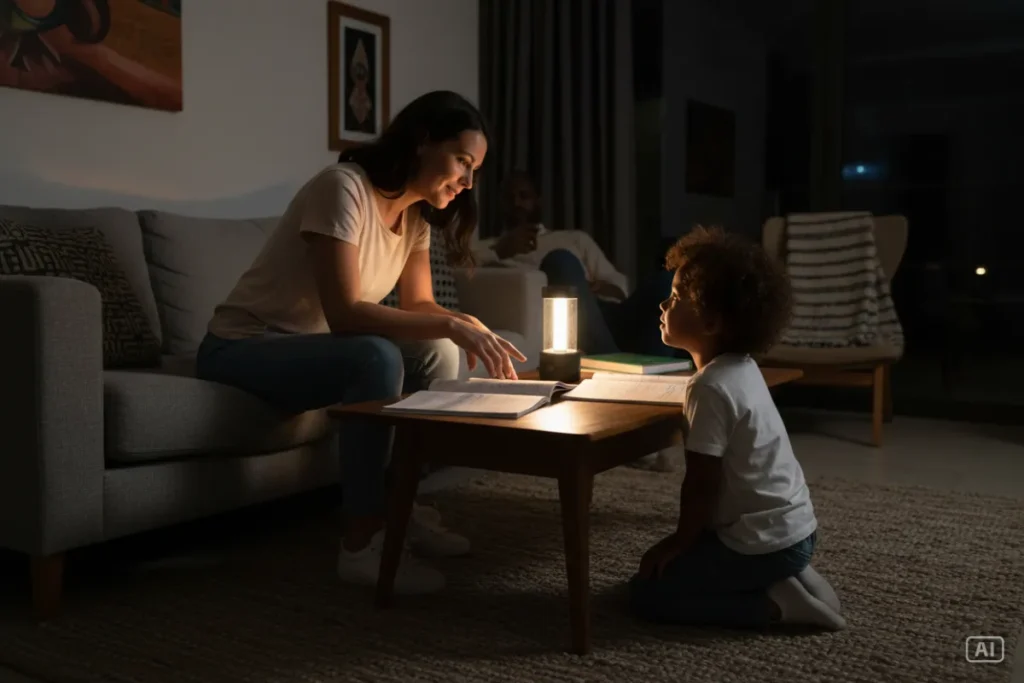
- Lounge and dining room: A portable lantern with adjustable brightness suits this space best — bright enough for activity, dimmable for relaxed evenings.
- Children’s bedroom: A warm-toned, dimmable light with a long battery life. Kids are more comfortable with warm white light than harsh cool white during the night.
- Home office: Bright, directional light that reduces eye strain. A COB LED panel or a high-lumen desk lantern positioned to illuminate your workspace without glare works best.
- Outdoor and security: A solar-powered motion-activated floodlight is the right tool here — completely independent of the grid and triggered automatically.
For a complete breakdown of how emergency lighting fits into a full load shedding preparation plan, the Essential Gadgets Every Home Needs During Load Shedding covers every product category from lights to power backup to cooking solutions.
Step-by-Step: Setting Up Emergency Lights Throughout Your Home
A planned approach means you’re never caught in the wrong room with no light when load shedding hits.
- Walk through your home and identify the three most critical areas. Usually the passage, kitchen, and main lounge or bedroom — start there before buying lights for every room.
- Install a plug-in auto-switch emergency light in the passage first. This is your safety priority — it ensures you can always navigate your home safely in the dark.
- Place a rechargeable lantern in the lounge or kitchen where the family spends most load shedding time. Keep it charged on a shelf or counter during the day.
- Add a COB LED work light in the kitchen if cooking during load shedding is a regular occurrence. Position it where it lights the counter and stove area evenly.
- Test every light before you need it. Simulate load shedding by switching off the mains — confirm auto-switch lights activate, check battery levels on manual lights, and note which ones need a top-up charge.
- Set a weekly charging reminder for any lights that don’t auto-charge from the wall. A dead emergency light is no emergency light at all.
Zack’s Verdict
Candles are not a load shedding strategy — they’re a fire hazard dressed up as nostalgia. The best emergency lights for South African homes don’t need to cost a fortune: a R120 plug-in auto-switch light in the passage, a R250 rechargeable lantern for the lounge, and a R80 COB LED panel for the kitchen gives you a fully lit home through any load shedding slot for under R500 total. That’s less than a tank of petrol and it lasts for years. Stop buying candles in bulk and make one sensible purchase that actually solves the problem. The only real decision is choosing auto-switch for fixed locations and portable lanterns for rooms you move between — get both and you’re covered.
FAQ
Q: What is the difference between an emergency light and a regular rechargeable light?
A: A true emergency light has a built-in circuit that monitors mains power and switches on automatically the moment power cuts — no manual action required. A regular rechargeable light needs you to switch it on manually. For passages, stairwells, and children’s rooms, the auto-switch feature is a genuine safety advantage.
Q: How many emergency lights does a typical South African home need?
A: A practical minimum is three — one auto-switch plug-in for the passage, one portable lantern for the main living area, and one bright light for the kitchen. Larger homes or homes with children should add bedroom lights as a priority.
Q: Can I leave an emergency light plugged in all the time?
A: Yes — plug-in emergency lights are designed for permanent installation. They include overcharge protection and draw minimal power when fully charged, essentially acting as a trickle-charged standby device until load shedding activates them.
Q: What brightness level do I need for a lounge or kitchen during load shedding?
A: Aim for at least 200 lumens for a bedroom or lounge used for relaxed activity, and 400+ lumens for a kitchen where you’re cooking or working. Always check the lumen output in the product specs — wattage alone doesn’t tell you how bright a light actually is.
Q: Are cool white or warm white LEDs better for home emergency lights?
A: Warm white (2700K–3000K) is more comfortable for living areas and bedrooms — it’s easier on the eyes during extended use. Cool white (5000K–6500K) is better for task-focused areas like kitchens and home offices where you need to see clearly. Ideally, choose a light with adjustable colour temperature.
Q: How do I know if my emergency light’s battery is degrading?
A: The clearest sign is noticeably shorter runtime despite a full charge. If a light that used to last 5 hours on a charge now dies after 2 hours, the battery is degrading. Most built-in lithium batteries maintain strong performance for 2–3 years of daily load shedding use before this becomes noticeable.
Q: Is it safe to use emergency lights around children?
A: Yes — LED emergency lights produce very little heat compared to incandescent bulbs or candles, making them significantly safer around children. Avoid any light with exposed charging contacts or small removable parts for very young children, and opt for lights with rounded, stable bases that can’t be easily knocked over.
Q: Can I use a solar emergency light indoors?
A: You can charge a solar light indoors through a sunny window, though efficiency drops by 30–50% compared to direct outdoor sunlight. For indoor use, position the solar panel on your sunniest north-facing windowsill during the day. Solar lights work best as outdoor security lights or as a supplementary indoor option rather than your primary room light.
Light Up Every Room — Don’t Let Load Shedding Win
The right emergency lighting setup turns load shedding from a disruptive blackout into a minor inconvenience your household barely notices. It costs less than you think, takes minutes to set up, and works automatically every single time. Start with the passage and the kitchen, add the lounge, and work outward from there.
Browse the full range of emergency lights and load shedding solutions at Zacks Bargains — practical products at honest South African prices.