Solar Security Camera vs Battery Camera: Which One Is Worth Your Money in South Africa?
Both solar cameras and battery-only cameras sit in the same price range, look similar on the shelf, and run without mains power — so it’s easy to grab the wrong one. The difference between them is a big deal in the long run, especially in South Africa where load shedding is a permanent part of life and you can’t afford to babysit your security setup every few weeks.
A battery camera gives you flexibility up front but demands regular recharging or battery swaps to stay operational. A solar camera charges itself and keeps going indefinitely — as long as the sun keeps rising. This guide breaks down exactly where each one wins so you can make the right call for your home, budget, and situation.
What’s the Real Difference Between Solar and Battery Cameras?
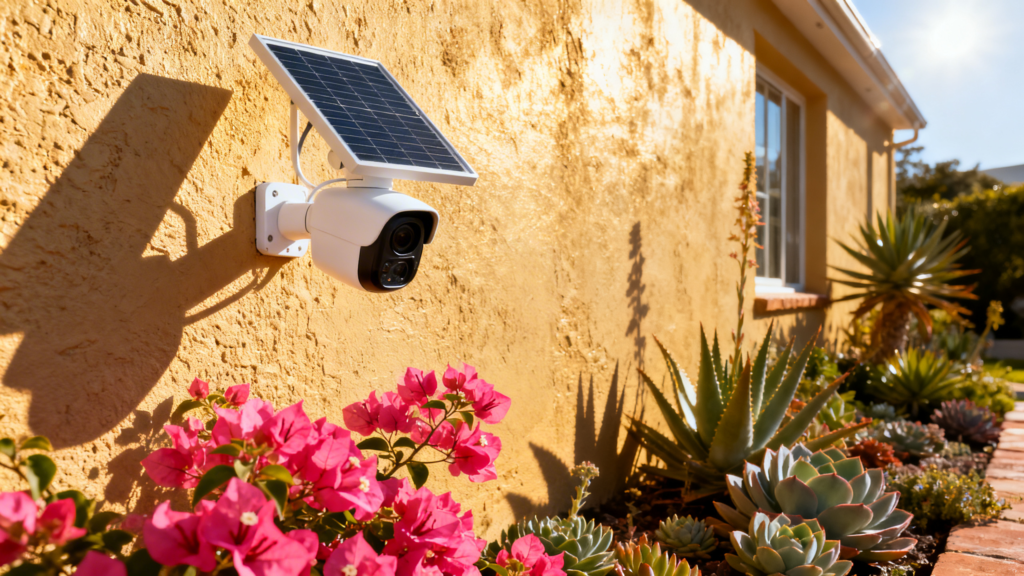
The core difference comes down to one thing: how they recharge. A solar camera has a built-in solar panel that continuously tops up the battery during daylight hours. A battery-only camera runs purely off its internal battery, and when that battery dies, you’ve got a dead camera until you plug it in or swap the battery.
Both types are wireless and cable-free, which is why they get confused so often. But in practice, a solar camera is a set-it-and-forget-it solution, while a battery camera is more of a set-it-and-remember-to-charge-it solution. Over a year, that difference adds up — especially if your camera is mounted somewhere inconvenient to reach, like above a gate or on a roofline.
How Long Does Each Type Actually Last Between Charges?
A well-positioned solar camera can run indefinitely without any manual intervention. In South Africa, where we average 8–10 hours of sunshine daily, most solar cameras fully recharge their batteries by mid-morning and run through the night without issue. Even in winter, a quality solar camera in Johannesburg or Cape Town gets enough sun to stay functional.
Battery-only cameras vary a lot depending on the brand and how active your area is. In a low-traffic spot, a good battery camera can last 3–6 months on a single charge. But if your camera covers a busy driveway or gate with constant motion triggers, that battery can drain in 3–6 weeks. That’s a real maintenance headache — and if load shedding hits while your camera battery is flat, you’ve got zero coverage at the worst possible time.
Which Camera Handles Load Shedding Better?
Solar cameras handle load shedding better — but both types have an advantage over wired CCTV because neither relies on mains electricity to operate. The critical difference is what happens after a long stretch of cloudy days or extended load shedding combined with overcast weather.
Battery cameras run purely on stored charge. If your battery is sitting at 20% when Stage 6 hits for three days straight, you could lose coverage entirely. Solar cameras keep topping themselves up the moment sunlight returns, so recovery is automatic. If you’re in a highveld area where summer storms roll in every afternoon, pair your solar camera with a slightly oversized solar panel to account for reduced charging on overcast days.
Solar Camera vs Battery Camera: Full Comparison
Here’s the complete breakdown across every factor that matters for South African homeowners:
| Feature | Solar Camera | Battery-Only Camera |
| Power Source | Solar panel + rechargeable battery | Rechargeable or replaceable battery only |
| Recharging Method | ✅ Automatic via sunlight | ❌ Manual USB charge or battery swap |
| Load Shedding Impact | ✅ None — self-charging | ⚠️ Runs on battery but needs manual recharge |
| Battery Life (per charge) | Indefinite with adequate sunlight | 1 – 6 months (motion-triggered) |
| Maintenance | ✅ Very low — clean panel occasionally | ⚠️ Regular recharging or battery swaps needed |
| Price Range (ZAR) | R800 – R3,500 | R600 – R2,500 |
| Placement Flexibility | Needs direct sunlight access | ✅ Go anywhere — indoors or outdoors |
| Night Vision | ✅ Yes (IR or colour) | ✅ Yes (IR or colour) |
| Best For | Outdoor, gates, farms, sunny spots | Indoor use, shaded areas, renters |
| Long-Term Running Cost | ✅ R0 ongoing | ⚠️ Electricity to recharge + possible battery replacement |
Bottom line: If the camera location gets reasonable direct sunlight, solar wins every time. Battery cameras earn their place indoors, in shaded spots, or wherever running a cable to recharge is easy.
How to Choose the Right Camera for Your Specific Situation
Work through these steps and you’ll have your answer in two minutes:
- Check the mounting location for sunlight. Stand at the spot where you want the camera. Does it get at least 4–6 hours of direct sun per day? If yes, solar is a practical choice. If it’s heavily shaded by trees, an overhang, or a north-facing wall that never sees sun, go battery.
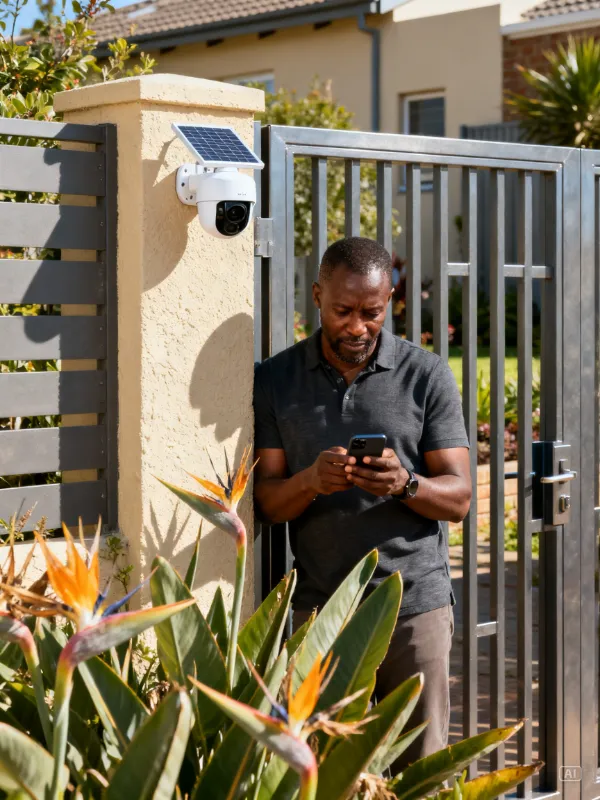
- Think about how often you’ll realistically recharge. Be honest with yourself. If the camera is above your gate 4 metres up, are you actually going to climb a ladder every 6 weeks to plug it in? If not, solar removes that problem completely.
- Consider where the camera is going — indoors or outdoors? Battery cameras are a better fit for indoor use: a nursery, a lounge, a home office. Solar cameras are built for outdoor exposure and aren’t typically designed for interior mounting.
- Factor in your load shedding schedule. If you’re in an area that regularly hits Stage 4–6, a battery camera without a consistent recharging routine could leave you exposed. Solar cameras self-recover the moment sunlight returns — no action needed from you.
- Add up the total cost of ownership. Battery cameras may cost slightly less upfront, but factor in electricity to recharge, possible battery replacements over 2–3 years, and the time cost of maintenance. Solar cameras typically win on total cost over a 2-year period.
Are There Any Situations Where a Battery Camera Is the Better Choice?
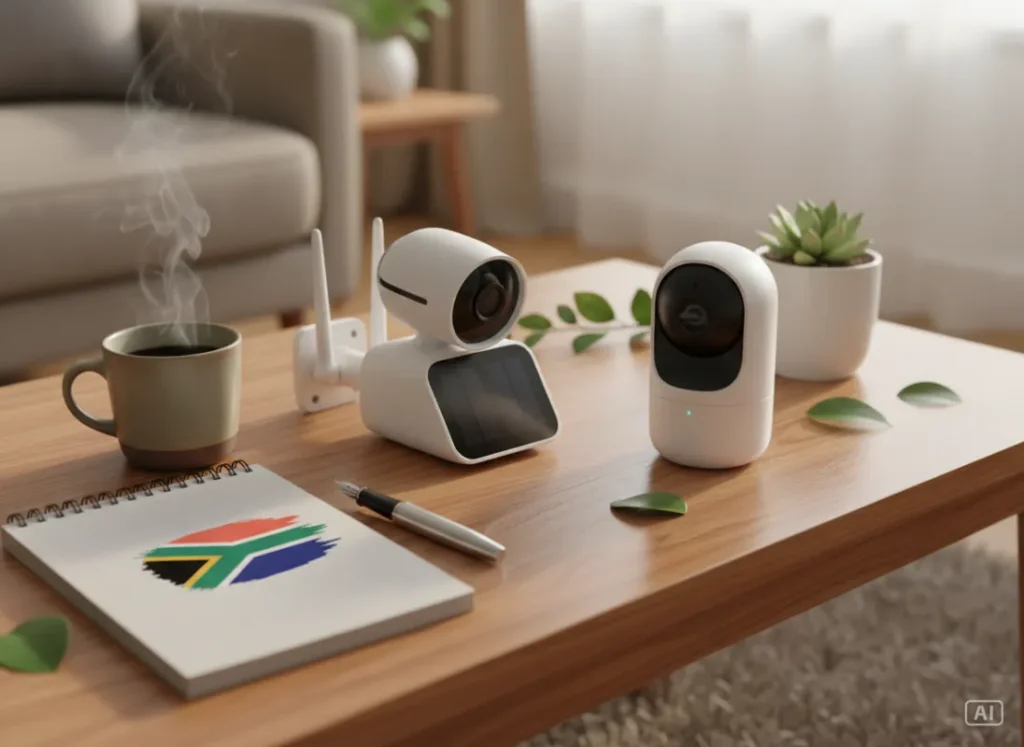
Yes — there are specific situations where battery cameras make more sense, and it’s worth being upfront about that. The most common one is indoor security: a battery camera in your lounge, baby’s room, or home office doesn’t need a solar panel, and you can charge it easily off a USB point every few months.
Battery cameras also make sense in heavily shaded outdoor spots where a solar panel simply can’t do its job — under a deep carport roof, inside a covered patio, or on a south-facing wall that never gets direct sun. In these cases, a battery camera gives you wireless security without forcing a solar panel somewhere it won’t charge properly. The Ultimate Guide to Solar Security Cameras in South Africa covers shading workarounds if you want to push a solar option in a tricky location.
Solar security camera maintenance
What Zacks Bargains Recommends
For outdoor security in South Africa — gates, driveways, garden perimeters, or any spot that gets sun — a solar camera is the stronger long-term investment. The self-charging design removes the single biggest failure point of battery cameras: human forgetfulness. You set it up once, and it keeps watching year after year with almost zero upkeep.
For indoor use, shaded spots, or situations where you want a lower upfront spend and don’t mind the occasional recharge, a quality battery camera gets the job done. Just build a reminder into your phone calendar to check the battery every 6–8 weeks, especially going into winter when days are shorter.
If you’re unsure which camera is right for your specific property layout, have a look at our full range at Zacks Bargains — we stock both types and the product listings spell out exactly what conditions each model is designed for.
⚡ Zack’s Verdict
Battery cameras are fine — until you forget to charge them. And in South Africa, that’s exactly when criminals get busy: during load shedding, when your routine is disrupted and the last thing on your mind is whether the camera battery is full. A solar camera removes that variable entirely. It doesn’t care what stage load shedding is on. It doesn’t care that you’ve been flat-out at work for three weeks. It charges itself and keeps recording.
The only time I’d recommend a battery camera over solar is when there’s genuinely no sun available at the mounting location. Indoors, deep shade, north-facing wall in winter — those are legitimate battery camera situations. Everywhere else? Put a solar camera up and stop thinking about it.
Frequently Asked Questions
Do solar cameras stop working at night?
No — solar cameras charge their internal battery during the day and run off that stored power at night. A fully charged solar camera will typically run through the night and through several days of overcast weather without any issue.
How often do you need to charge a battery security camera?
It depends on how active the camera’s field of view is. In a low-traffic area, a battery camera can last 3–6 months per charge. In a busy spot like a driveway or gate, that can drop to 3–6 weeks. Solar cameras eliminate this concern by recharging automatically.
Can a solar camera work in cloudy weather?
Yes, though charging is slower on overcast days. Quality solar cameras include a battery large enough to cover several days of reduced sunlight. In South Africa’s climate, even cloudy days generate enough diffused light to keep most solar cameras functional.
Which camera is better for a rental property?
Both are good options since neither requires permanent wiring. Battery cameras are slightly easier to move between rooms or take with you when you leave. Solar cameras are better for fixed outdoor spots where you want long-term, maintenance-free coverage.
Are solar cameras more expensive than battery cameras?
Upfront, solar cameras can cost a bit more due to the integrated solar panel. But over 12–24 months, they’re typically cheaper all-in because you spend nothing on electricity to recharge and avoid potential battery replacement costs.
Can I use a battery camera outdoors?
Yes — most battery cameras are weatherproofed for outdoor use. Just be aware that cold winter nights and high summer heat both affect battery performance and lifespan. Solar cameras are generally better engineered for permanent outdoor exposure.
What happens to a solar camera during extended load shedding?
Nothing — it keeps running. The camera operates off its internal battery, which is continuously recharged by the solar panel during daylight hours. As long as the sun is shining, extended load shedding has zero impact on a properly positioned solar camera.
Is a solar camera or battery camera better for a farm gate?
Solar, without a doubt. Farm gates are typically in open areas with excellent sun exposure, and you don’t want to be driving out every few weeks just to recharge a camera. A solar camera with a 4G SIM slot is the ideal setup for remote farm gate monitoring.
The Bottom Line
Both solar and battery cameras are a massive step up from doing nothing, and either one beats a wired CCTV system that goes dark every time Eskom cuts the power. But if you’re comparing the two, solar cameras win on long-term practicality for most South African outdoor situations — simply because they take care of themselves.
Browse the full range of solar and battery security cameras at Zacks Bargains — practical options chosen specifically for South African conditions, load shedding realities, and budgets that make sense. No overpriced imported kits, no confusing specs. Just cameras that work.