Outdoor Solar Security Camera Review: The Best Options for SA Homes in 2026
If you’ve been searching for an honest outdoor solar security camera review that actually speaks to South African conditions — load shedding, dusty driveways, high walls, and all — you’re in the right place. Most reviews are written for UK or US suburbs with reliable grid power. That’s not your life. Eskom has made sure of that. The good part? Solar-powered outdoor cameras have become genuinely brilliant for SA homes, and the right one can run 24/7 without touching your electricity bill.
This review covers what to look for, what to avoid, and which setups are worth your rands right now.
What Makes an Outdoor Solar Security Camera Different From an Indoor One?
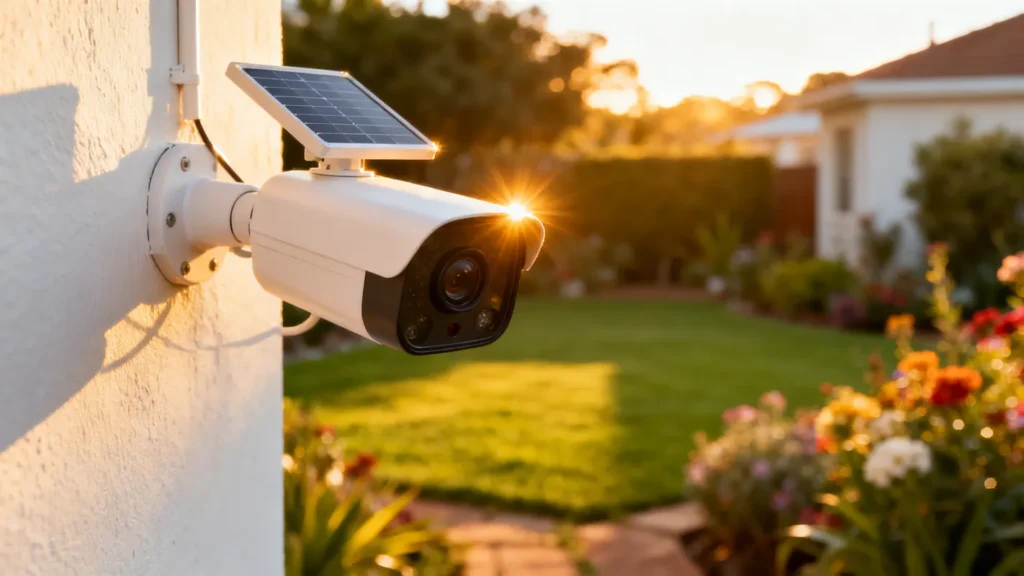
An outdoor solar security camera is built to handle weather, direct sunlight, dust, and temperature swings — while also generating its own power. It’s a completely different animal from an indoor unit. Indoor cameras are lighter, cheaper, and not weatherproofed. Outdoors, you need an IP65 or higher rating, a robust solar panel, and a battery that can carry the camera through cloudy days and load shedding windows.
The solar panel charges a built-in lithium battery during daylight hours. At night — or during a blackout — the camera draws from that battery. A decent setup should run for 2–3 days on a full charge even with no sun, which covers most of Eskom’s current nonsense comfortably.
Outdoor Solar Security Camera Review: Key Features to Compare
Not all outdoor solar cameras are equal. Here’s what separates the reliable ones from the junk:
| Feature | Budget Option | Mid-Range (Recommended) | Premium |
|---|---|---|---|
| Resolution | 1080p | 2K / 4K | 4K HDR |
| Night Vision | IR (black & white) | Colour night vision | Colour + spotlight |
| Solar Panel | 2W | 3–5W | 6W+ |
| Battery | 5,000 mAh | 10,000–15,000 mAh | 15,000+ mAh |
| Storage | Cloud only | SD card + cloud | SD + cloud + NAS |
| Motion Detection | Basic PIR | Smart AI detection | AI + vehicle/person filter |
| IP Rating | IP65 | IP66 | IP67 |
| Price Range | R600–R900 | R1,200–R1,800 | R2,500+ |
For most SA homes — townhouse, freestanding, or small farm — the mid-range is the sweet spot. You get real night vision, enough battery backup, and smart detection without paying for features you’ll never use.
How Well Does an Outdoor Solar Security Camera Perform at Night?
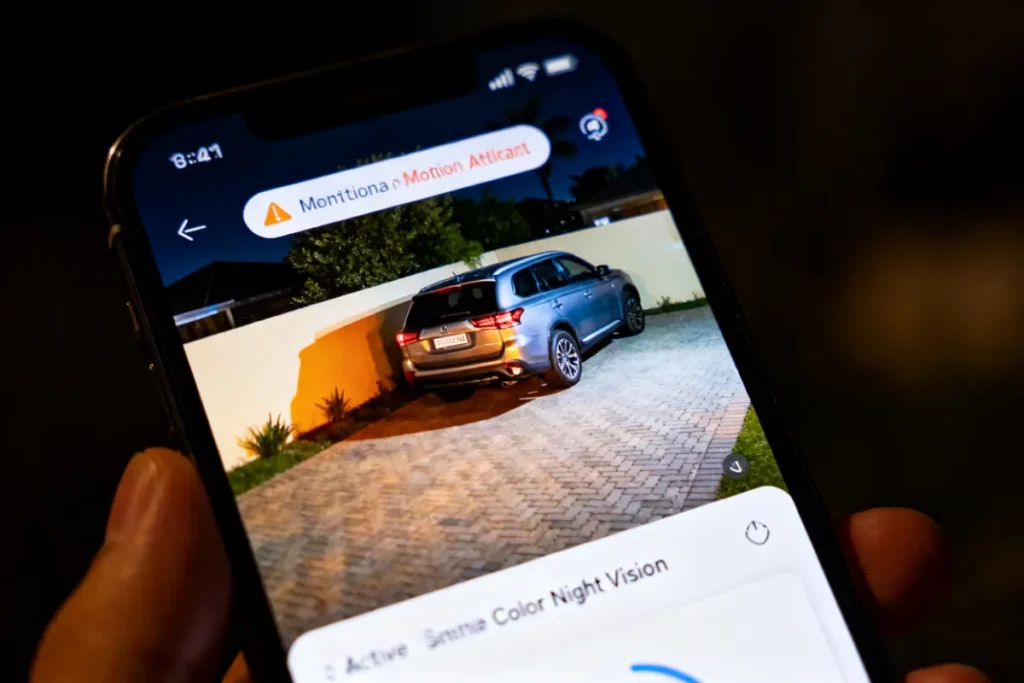
This is the question that matters most for South African buyers, and the honest answer is: it depends on the camera. Budget models use standard infrared night vision — you get grainy black-and-white footage up to about 10 metres. It works, but it’s not great for identifying faces or number plates.
Mid-range and premium models now offer colour night vision using a low-light sensor combined with a built-in spotlight or ambient light boost. These produce full-colour footage even at 02:00, which makes a massive difference if you ever need to show footage to SAPS or a body corporate. If night performance is your priority, don’t compromise on this feature.
Does Load Shedding Affect Outdoor Solar Cameras?
No — and that’s exactly why they’ve become so popular. A solar outdoor camera is fully off-grid. It generates its own power and stores it internally, so Eskom’s schedule is irrelevant. Traditional CCTV systems tied to a DVR go dark the moment load shedding hits unless you’ve got a UPS or inverter running.
If you want to protect your property during Stage 4 or Stage 6 cuts, a solar outdoor camera is the most straightforward solution.
Step-by-Step: How to Mount an Outdoor Solar Security Camera Correctly
Getting the mounting right makes a huge difference to both performance and coverage. Follow these steps:
- Choose your position first. Mount at 2.5–3 metres high, angled down at 15–20 degrees. This gives you face-level footage and a wide coverage zone.
- Check the sun direction. The solar panel needs 4–6 hours of direct sun daily. In SA, face it north. Avoid spots shaded by trees or roof overhangs.
- Keep the panel and camera together. Most units have the panel attached to the camera body. Don’t let anything block the panel.
- Use the included wall plugs and screws. Drill into brick or concrete — don’t rely on adhesive mounts for outdoor use.
- Connect to WiFi before mounting. Set the camera up indoors via the app first. It’s much easier than perching on a ladder troubleshooting connectivity.
- Test the motion zone in the app. Draw your detection zone to cover the gate, driveway, or entrance — not the street, which triggers false alerts constantly.
This entire process takes under 30 minutes and requires no electrician. That’s one of the biggest practical wins of solar outdoor cameras.
Outdoor Solar Security Camera Review: Best Use Cases for SA Properties
These cameras aren’t one-size-fits-all, but they cover most SA scenarios extremely well. Here’s where they shine:
- Boundary walls and gates — the most common use case. Solar cameras on high walls give you clear footage of anyone approaching the entrance.
- Driveways — catch number plates of vehicles entering and exiting.
- Outbuildings, wendy houses, and tool sheds — areas you can’t easily run a cable to.
- Rental properties and Airbnbs — no wiring changes, takes minutes to install and remove.
- Small farms and smallholdings — remote placement where grid power doesn’t reach.
They’re less suited to covered parking garages (solar panel needs sun) or fully enclosed spaces. For indoors or shaded areas, a battery-only or wired camera makes more sense.
Recommended Solution: What We’re Seeing Locals Buy Right Now
For most South African homes, 4K Solar Camera is the setup we recommend. It runs 2K or 4K resolution, includes colour night vision, has a 6W solar panel, and stores footage locally on a micro SD card — so you’re not dependent on a monthly cloud subscription. This is one of the most popular setups we’re seeing locally right now, particularly for homes in gated estates and townhouse complexes with body corporate restrictions on cabling. Simple plug-and-mount installation means no electrician required and no damage to walls or boundary plaster. Perfect for homeowners, landlords, or anyone renting who still wants real security without a permanent install.
For a full breakdown of all camera types and price bands, check out the Ultimate Guide to Solar Security Cameras in South Africa.
Zack’s Verdict
Look, I’m not going to oversell this. Outdoor solar cameras aren’t magic — a determined criminal will still get past a camera if they want to. But the combination of zero Eskom dependency, no cabling costs, and 24/7 recording makes them the most practical outdoor security upgrade most SA homeowners can buy right now for under R1,500. The mid-range models have genuinely caught up to the wired systems that cost three times as much five years ago. If your driveway or gate isn’t covered yet, sort it out.
FAQ: Outdoor Solar Security Cameras in South Africa
Q: Will an outdoor solar camera still record during load shedding? Yes. Solar cameras store power in a built-in battery and operate completely off-grid. Load shedding has zero effect on recording or live viewing.
Q: What IP rating do I need for an outdoor camera in South Africa? Minimum IP65 for outdoor use. This protects against dust and rain. IP66 or IP67 is better if the camera is in a very exposed position like a coastal or highveld location with heavy afternoon storms.
Q: How long does the battery last without sun? A quality mid-range camera with a 10,000–15,000 mAh battery will run for 2–3 days without any solar charging. Budget models may only manage 12–18 hours.
Q: Can I view footage on my phone remotely? Yes — all modern solar outdoor cameras connect via WiFi and include a free app for live viewing, playback, and motion alerts. You’ll need a working internet connection at the property.
Q: Does the camera need to face north in South Africa? The solar panel needs to face north to get maximum sun exposure. The camera itself can face whatever direction gives you the best coverage angle.
Q: What happens to footage if there’s no SD card and the cloud subscription lapses? Nothing gets saved. Always use a micro SD card as your primary local backup. Cloud storage is a bonus, not a replacement.
Q: Is it safe to mount a solar camera on a rental property? Yes. Solar cameras mount with screws and leave no permanent wiring. Most landlords and body corporates have no objection. Solar WiFi Security Camera is a popular choice for renters for exactly this reason.
Q: What resolution do I actually need outdoors? 1080p covers basic motion detection and general footage. For number plate capture or face identification, go 2K minimum. 4K is ideal if your camera covers a large driveway or gate area.
Final Thoughts: Is an Outdoor Solar Security Camera Worth It for SA Homes?
For the vast majority of South African homes, yes — it’s one of the most practical security upgrades you can make. No wiring, no Eskom dependency, no monthly electrician bills, and solid 24/7 coverage. The technology has matured to the point where mid-range solar outdoor cameras genuinely outperform entry-level wired systems from a few years ago.
Head over to Zacks Bargains to see the current range of outdoor solar cameras — all priced for South African budgets, with local context built into every product description.