Why solar charging devices are essential for surviving load shedding
When Eskom completely drops the ball and Stage 6 hits, relying on wall plugs to keep your phone alive is a losing battle. Investing in reliable solar charging devices is the ultimate hack to bypass the national grid completely and keep your critical tech running. You do not need a massive, expensive roof installation to harness the harsh African sun; you just need a portable panel or a sun-powered battery bank. It puts the control back in your hands, ensuring your family stays connected even when the power is off for days at a time.
How modern solar charging devices actually work in South Africa
Modern solar charging devices use high-efficiency photovoltaic panels to convert our blazing South African sunlight directly into usable battery power. You simply leave them outside on the patio table or on a north-facing windowsill, and they silently trickle-charge their internal lithium batteries.
Unlike the cheap, gimmicky solar keychains from a decade ago, today’s portable solar charger technology is genuinely powerful and built to last. A good unit can absorb enough energy during a sunny Highveld afternoon to fully recharge your smartphone two or three times over. It is essentially free electricity that completely ignores the load shedding schedule, giving you total independence.
The different types of solar charging devices available
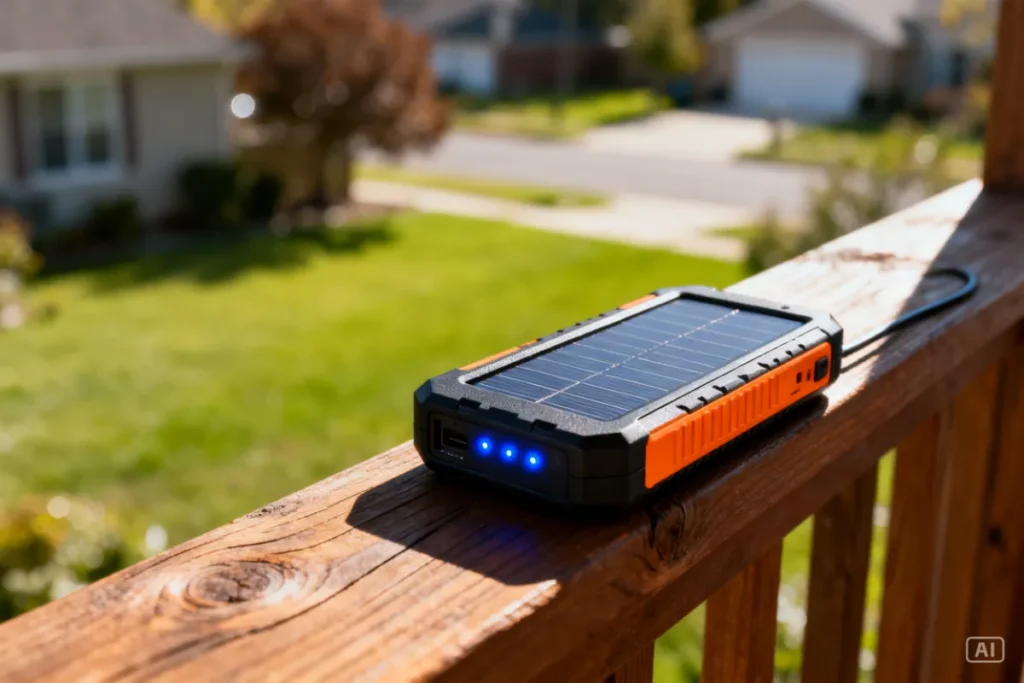
Choosing the right gear depends entirely on whether you are trying to keep a single phone alive or power a whole remote campsite. The most popular option for everyday use is a heavy-duty solar power bank South Africa model, which combines a massive battery pack with a built-in solar panel on the back.
If you need to charge multiple devices quickly, a foldable solar panel without a built-in battery is often much more efficient. You fold it out in the direct sun and plug your phone or a standard power bank straight into its USB ports. These off-grid charging solutions are brilliant for throwing in your bakkie when you head out into the bush or just keeping in the lounge for extended neighbourhood blackouts.
Step-by-step: Getting the best performance from your solar gear
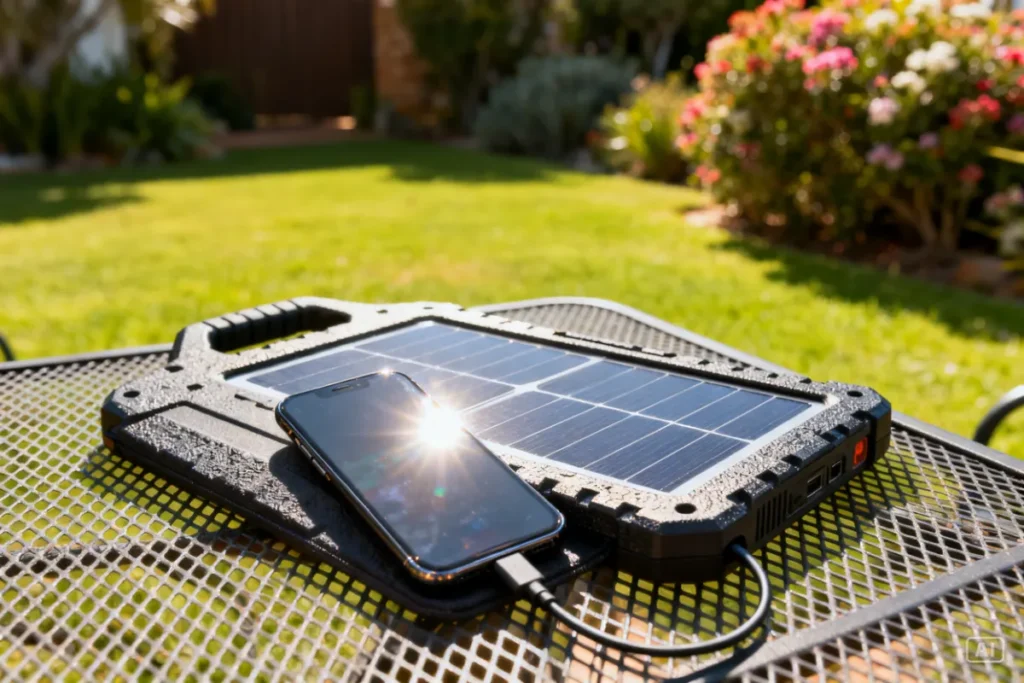
A solar panel is only as good as the sunlight hitting it, so placement and timing are absolutely everything when you are trying to catch a charge. You cannot just leave it under a shady tree or behind a thick curtain and expect your phone to charge in ten minutes.
Follow these basic rules to maximize your charging speed and protect your battery health:
- Chase the sun: Always angle your panels directly towards the sun, ideally facing north for maximum exposure throughout the entire day.
- Avoid window glass: If possible, place the panel outside. Modern house glass has UV filters that can block up to 40% of the sun’s charging energy.
- Keep it clean: A dusty or muddy panel produces significantly less power. Wipe the surface down with a damp cloth every few weeks.
- Charge a bank, not a phone: Phones can overheat and shut down if left baking in direct sunlight. Rather plug the solar panel into a power bank sitting in the shade, and use that bank to charge your phone later.
Comparing solar chargers vs standard wall power banks
The biggest difference between these two technologies is their absolute reliance on the Eskom grid to function. A standard wall-charged power bank is completely useless if you forget to plug it in before the lights go out, whereas a solar model can always recover itself using nature.
While standard power banks charge much faster from a wall socket, a sun-powered unit offers long-term survival capabilities. If an intense summer storm knocks out the local neighbourhood substation for three days, the load shedding phone charger with a solar panel becomes the most valuable item in your house.
| Feature | Off-Grid Solar Charger | Standard Power Bank |
| Power Source | The Sun (100% Free) | Grid Electricity |
| Grid Independence | Total | None |
| Recharge Speed | Slow (requires full day of sun) | Fast (via wall plug) |
| Best Use Case | Extended blackouts, camping | Daily short-term load shedding |
Recommended solutions for your load shedding survival kit
You need rugged, weather-resistant gear that can survive being left out in the harsh African sun without the plastic melting or cracking. Stick to reputable brands with actual technical specifications listed on the box so you know exactly what you are paying for.
For everyday carry and emergency backup, a high-capacity Solar Power Bank 20000mAh is an absolute lifesaver to keep in your work bag or cubbyhole. If you want maximum charging speed for multiple devices at home, a Foldable Solar Panel Charger paired with your existing battery packs is the ultimate setup. To see how these gadgets fit into your broader off-grid strategy, make sure to read our Essential Gadgets Every Home Needs During Load Shedding for the full picture.
Zack’s Verdict
Relying entirely on a broken national grid to keep your communication lines open is a massive risk that you simply do not have to take. Buying a solar charger is the cheapest, most practical insurance policy you can get for your digital life in South Africa.
I have spoken to countless okes who were stuck with dead phones during severe grid failures, completely cut off from their families and work emails. For a few hundred Rands, you can buy absolute peace of mind. Leave a solar unit on your windowsill, let the sun do the heavy lifting, and stop stressing about Eskom’s daily schedule.
Frequently Asked Questions
People often have unrealistic expectations about how fast the sun can charge a massive battery pack. Here are the straight, honest answers to the most common questions we get about going off-grid.
- How long does it take to charge a solar power bank in the sun?A standard 10,000mAh solar power bank takes about 30 to 40 hours of direct sunlight to fully charge from zero. The solar panel is designed for emergency trickle-charging, not rapid fast charging.
- Can I still charge these devices from a normal wall plug?Absolutely. All good solar power banks have a standard USB or USB-C input port so you can fast-charge them from the wall when the grid is actually working.
- Do they work on cloudy or rainy days?They will still draw a tiny bit of ambient UV light through the clouds, but the charging speed will drop to almost zero. They need direct, bright sunlight to work effectively.
- Is it safe to leave my phone in the sun while it charges?No, modern smartphones will shut down or permanently damage their internal batteries if left baking in the hot sun. Always keep your phone in the shade while the panel sits in the sun.
- Are foldable solar panels waterproof?Most high-quality foldable panels are water-resistant (IPX4 rating) to survive a light drizzle or damp grass, but they are not fully waterproof. You should not leave them outside in a severe Highveld thunderstorm.
Conclusion
Taking a small step entirely off the grid is incredibly empowering, especially when dealing with the daily frustrations of the South African power crisis. Solar gear provides a reliable, infinitely renewable safety net that guarantees you are never left in the dark with a dead phone.
Stop letting the utility company dictate when you can and cannot use your own technology. Head over to Zacks Bargains to browse our range of tough, tested the best solar charger SA options, and grab the gear that actually works when the lights go out.