Portable Power Stations Explained: Power Your Home During Load Shedding
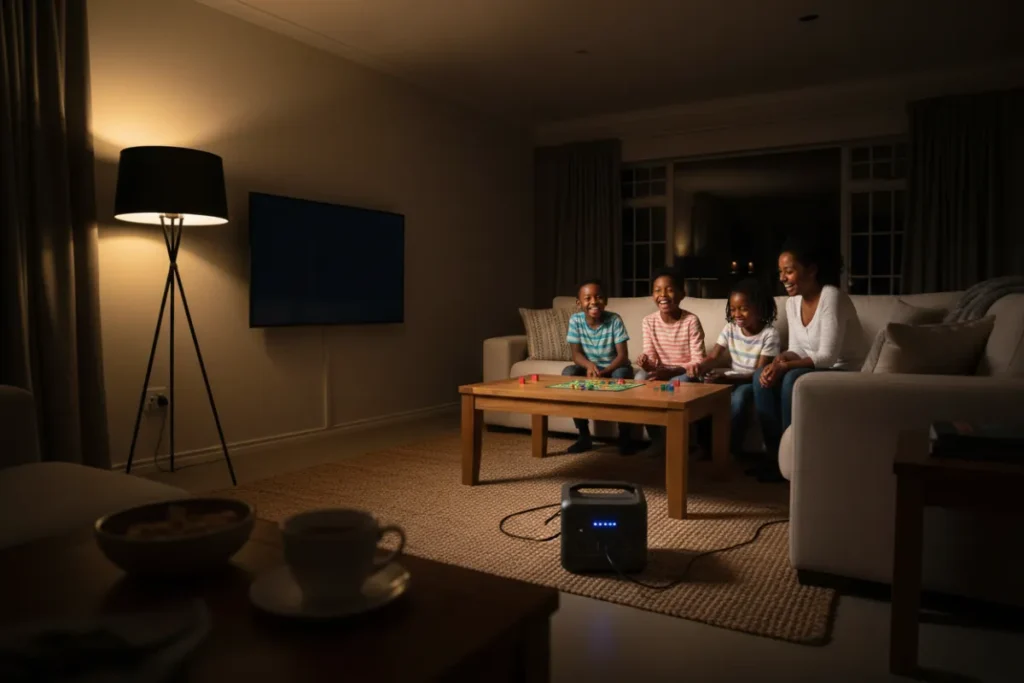
When Stage 6 hits and the entire neighbourhood goes quiet, a simple cell phone power bank will not keep your television or laptop running. Having Portable Power Stations Explained to you in practical, everyday terms is the absolute best way to start fighting back against the collapsing South African power grid. These clever devices are essentially massive lithium batteries combined with a built-in inverter, allowing you to plug standard 220V household appliances directly into them. You get all the benefits of an off-grid solar system packed into a single, portable box that requires zero installation or wiring.
Why getting Portable Power Stations Explained is crucial before buying
You need these devices explained because buying the wrong size will leave your appliances dead and your wallet empty. They offer simple, plug-and-play backup power for your 220V home devices, replacing the need for messy inverter wiring or dangerous petrol generators.
Many South Africans panic during heavy load shedding and rush to the hardware store to buy the biggest battery they can afford. If you do not understand the critical difference between wattage output and battery capacity, you might buy a unit that cannot even turn your television on. These units are completely portable and modular, meaning you can carry them from the lounge to the home office, or even pack them in the boot for a camping trip when Eskom is actually behaving.
How these lithium backup units actually work
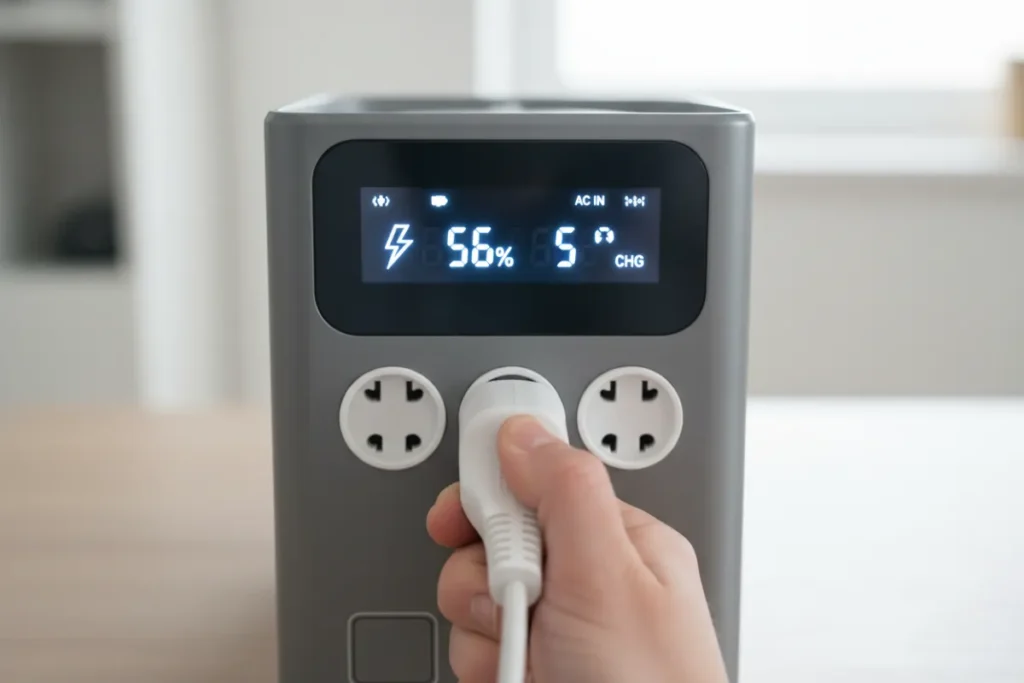
These units work by storing grid electricity in a high-capacity lithium battery and using an internal inverter to convert that stored energy into standard 220V AC power. You simply plug your normal household appliances directly into the front panel just like you would use a standard wall socket.
There is no complicated installation or certified electrician required to get your house up and running. You charge the box from your wall plug while the electricity is on, and it holds that charge safely until the blackout hits. Modern units use pure sine wave inverters, which means the power they push out is perfectly clean and identical to grid power, keeping sensitive electronics like laptops, gaming consoles, and smart TVs completely safe from damage.
Step-by-step: Sizing up your home power requirements
Finding the right size requires adding up the total wattage of the devices you want to run simultaneously. You must ensure the power station’s maximum output is significantly higher than the combined draw of your appliances so it does not trip.
Do not guess your power usage. Follow this straightforward sequence to calculate exactly what size machine you need for your home:
- Check appliance labels: Look at the back of your television, laptop charger, and lamps to find their required wattage (W).
- Calculate the total load: Add those numbers together; for example, an 80W TV plus a 60W laptop equals a 140W total continuous load.
- Pick your inverter output: Choose a unit with an inverter rated for at least 300W to handle that 140W load comfortably with plenty of safety headroom.
- Check the battery capacity: Look at the Watt-hours (Wh) to see how long it will last; a 300Wh battery running a 100W load will last roughly three hours.
- Consider the recharge time: Make sure the unit you choose has fast-charging capabilities so it can refill its battery during the short two-hour windows between Stage 6 slots.
Comparing a portable inverter for home against petrol generators
Portable power units are completely silent, safe for indoor use, and require zero maintenance, whereas petrol generators are incredibly loud, produce toxic fumes, and need constant refueling. Battery stations cost more upfront but are infinitely cheaper and easier to live with on a daily basis.
If you live in a townhouse complex or an apartment block in South Africa, running a petrol generator on your balcony is usually banned by the body corporate anyway. Lithium battery boxes completely bypass these restrictions because they have no moving parts and emit zero exhaust.
| Feature | Lithium Power Station | Petrol Generator |
| Noise Level | Silent (slight cooling fan) | Very loud |
| Indoor Safety | 100% safe (No fumes) | Deadly (Carbon monoxide hazard) |
| Running Cost | Free (Recharges from the grid) | Very high (Petrol and oil costs) |
| Maintenance | None (Plug and play) | Regular oil changes and servicing |
Having Portable Power Stations Explained for running your television
Running your entertainment system during a blackout requires a unit with at least a 300W output and a pure sine wave inverter. You just plug your television and internet router into the AC socket on the front panel and continue watching the rugby without interruption.
A modern flat-screen LED TV uses surprisingly little electricity, usually drawing around 80W to 120W depending on the brightness settings. A reliable 500W power station will easily power the television, your fibre router, and a small standing lamp for an entire four-hour load shedding slot. It completely transforms a miserable, dark evening into a normal, comfortable night at home with the family.
Recommended solutions for your load shedding backup power
We recommend matching your specific household appliances to a tough, fast-charging lithium unit that can handle daily cycling. Do not overspend on a massive unit if you only want to watch television, run a router, and charge a laptop.
If you are looking for a solid entry-level machine to keep your lounge alive and the kids entertained, a 3000mAh Portable Power Station is a brilliant, budget-friendly starting point. For families needing to run a camping fridge, multiple laptops, and a big screen TV simultaneously, stepping up to a 5000mAh Portable Power Station gives you the extra output and battery capacity you need. To see how these lithium units fit into your broader household backup strategy, make sure you read our Essential Gadgets Every Home Needs During Load Shedding for the complete picture.
Zack’s Verdict
Let’s be completely honest, sitting in the dark waiting for Eskom to fix the national grid is a massive waste of your evenings. Buying a portable backup unit is the most practical, immediate way to take your household off the grid without tearing up your distribution board or spending fifty thousand Rands.
I speak to customers every single week who finally bit the bullet and bought a power station, and their only regret is that they didn’t do it two years ago. Stop suffering through Stage 6 with a dying cell phone and a candle. Grab a solid lithium unit, plug your TV in, and take back your comfort.
Frequently Asked Questions
Understanding wattages, battery types, and surge limits can be overwhelming when you just want to keep the lights on. Here are the straight, no-nonsense answers to the most common questions South Africans have about lithium backup units.
- Can a portable power station run my fridge or microwave?No, entry-level and mid-range units (under 1000W) cannot handle the massive starting power required by heating elements or large fridge compressors. They are designed for electronics, lights, and TVs.
- How long does the internal lithium battery last?High-quality lithium-ion models typically last for 500 to 800 full charge cycles, while newer LiFePO4 (Lithium Iron Phosphate) models can last over 3,000 cycles before the capacity degrades.
- Can I leave it plugged into the wall 24/7?Yes. Modern units have a built-in Battery Management System (BMS) that automatically stops drawing power once the battery is full, preventing overcharging and fire risks.
- What is the difference between pure sine wave and modified sine wave?Pure sine wave is perfectly clean power, identical to what comes out of your wall, keeping electronics safe. Modified sine wave is “dirty” choppy power that will make power bricks run hot and can damage sensitive TVs over time.
- Can I recharge the power station using solar panels?Yes, almost all modern power stations have a built-in MPPT controller. You just plug in a compatible portable solar panel, and it will charge the battery using the sun.
- How long does it take to recharge from a wall socket?This heavily depends on the model. Cheaper units take 6 to 8 hours, while premium fast-charging units can go from zero to 100% in under two hours, which is vital for Stage 6 schedules.
- Can I plug a standard multi-plug adapter into it?Absolutely. You can plug a normal South African multi-plug into the AC port to run multiple devices, provided the total combined wattage does not exceed the power station’s limit.
Conclusion
You do not have to accept sitting in the dark and quiet every time the power cuts. A portable lithium power station is a clean, silent, and highly effective way to keep your essential electronics running when the grid fails.
By calculating your wattage correctly and buying a pure sine wave unit, you guarantee that your family stays entertained, connected, and safe. Head over to Zacks Bargains to browse our range of tough, reliable backup power stations that have been specifically chosen to survive the harsh realities of South African load shedding.