Solar Powered Gadgets for Homes That Actually Work During Load Shedding
South Africans have had enough of Eskom calling the shots on how we live in our own homes. Solar powered gadgets for homes are no longer just for off-grid farmers or eco-warriors — they’re practical, affordable tools that everyday families in Joburg, Cape Town, and everywhere in between are using to take back control. Whether it’s keeping your lights on, your garden lit, or your devices charged, solar gadgets have become a genuine load shedding survival strategy.
The best part? You don’t need to spend R100,000 on a full solar installation to benefit. Some of the most useful solar powered gadgets cost less than R300 and start working the moment you unbox them.
Essential Gadgets Every Home Needs During Load Shedding
What Are Solar Powered Gadgets for Homes and Are They Worth It?
Solar powered gadgets for homes are devices that use built-in or attached solar panels to charge an internal battery, which then powers the device. They work completely independently from the grid — no wiring, no electrician, no monthly electricity bill for that device. In South Africa’s climate, where we get an average of 2,500 hours of sunlight per year, they’re not just worth it — they’re a no-brainer.
The honest answer on value is this: small solar gadgets deliver a high return on a low investment. A R250 solar lantern that charges during the day and lights your home for 6 hours every evening pays for itself within weeks compared to buying candles or running a generator.
The Best Solar Powered Gadgets for Homes in South Africa Right Now
Not every solar gadget on the market is worth your money. These are the categories that deliver the most practical value for South African households dealing with load shedding, high electricity costs, and security concerns.
Solar Lanterns and Lights
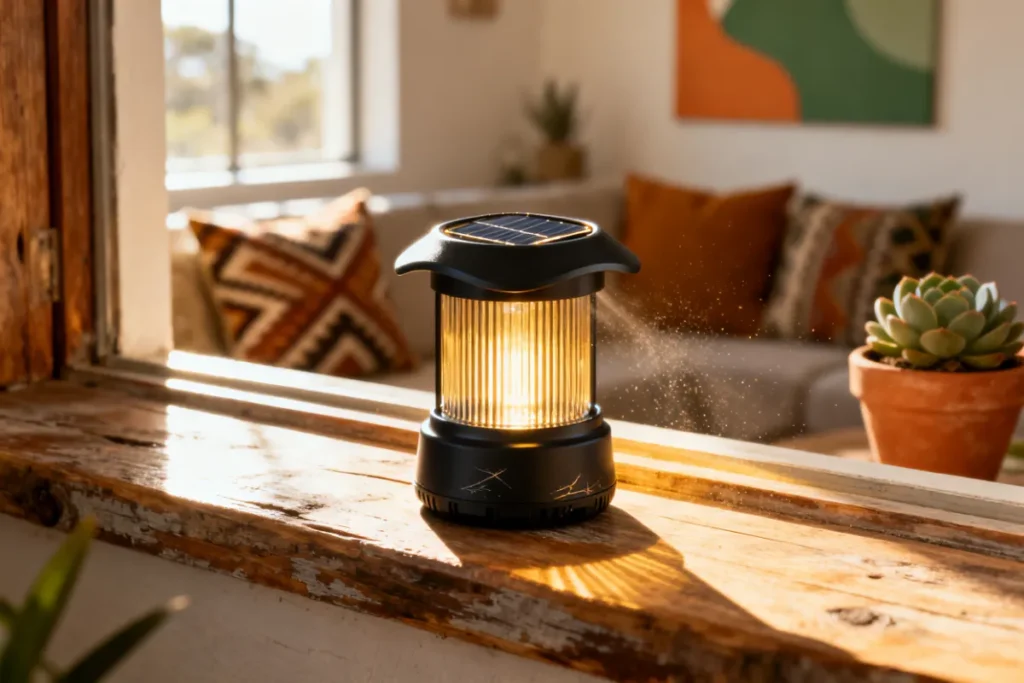
A solar lantern is the entry point for most households and for good reason — it solves the most immediate load shedding problem (darkness) at the lowest cost. A quality solar lantern charges in 6–8 hours of sunlight and provides 4–8 hours of bright light. Place it on a windowsill during the day and it’s ready to go by the time load shedding hits in the evening. For outdoor use, solar garden lights and security floodlights do the same thing automatically — charge by day, switch on at dusk.
Best Rechargeable Lights for Load Shedding
Solar Security Lights
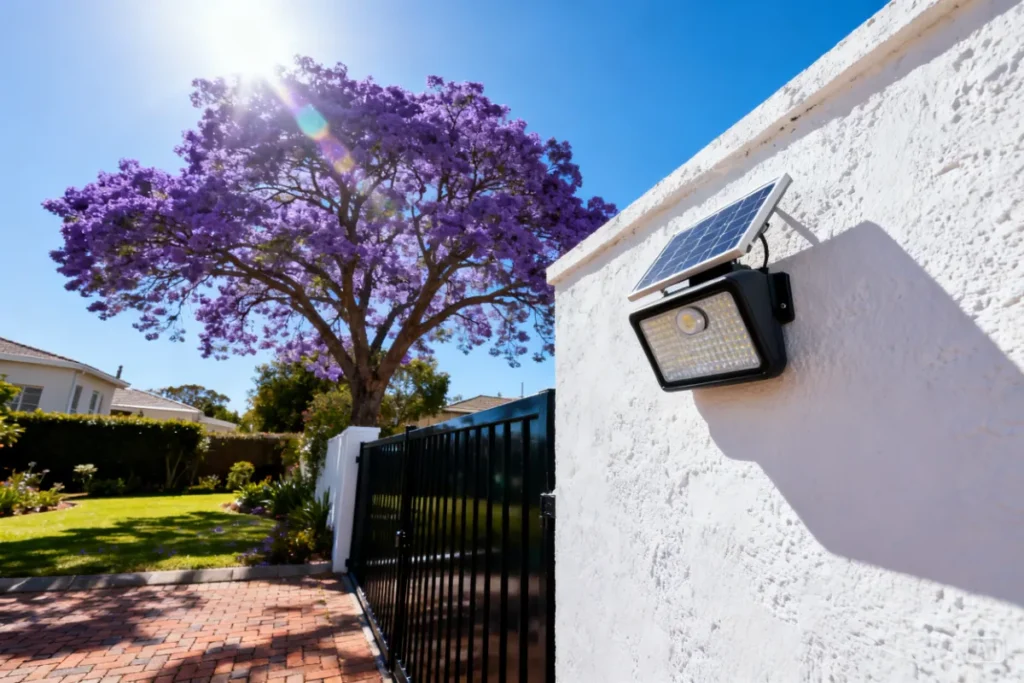
A solar powered security light with a motion sensor is one of the smartest home security upgrades available at a budget price. It charges during the day, stores energy in a built-in battery, and fires a bright LED flood when it detects movement — completely independent of Eskom. No wiring required; most mount with two screws. For a deeper look at this category, the Ultimate Guide to Load Shedding Survival Gadgets covers how solar security lighting fits into a complete home protection plan.
Solar Chargers and Power Banks
A solar-charging power bank is a step up from a standard power bank because it can top itself up during the day without needing to be plugged in. They’re not fast chargers — direct sunlight gives you roughly 1–2% battery per minute on most units — but left on a sunny windowsill or outside during a 4-hour load shedding slot, they’ll recover meaningful charge. Use them to keep your phone and small devices running when everything else is off.
How to Choose Solar Powered Gadgets for Homes Without Wasting Money
Buying the wrong solar gadget is easy to do, especially online where product listings can be misleading. Follow these guidelines and you’ll spend your Rands wisely every time.
- Check the panel size. Tiny solar panels on cheap gadgets produce almost no power. Look for panel dimensions in the product specs — a panel smaller than a playing card won’t charge a useful battery in a reasonable time.
- Look for battery capacity in mAh. Higher mAh means longer runtime. A solar lantern with 2000mAh will last noticeably longer than one with 800mAh, even if they look identical.
- Check the IP rating for outdoor products. Any solar gadget used outdoors should have at least an IP44 rating (splash resistant). IP65 or higher means it’ll handle Highveld thunderstorms without failing.
- Avoid gadgets with no charge indicator. You need to know when the battery is full, low, or not charging. Any solar product without some form of charge indicator is guesswork.
- Buy from a retailer who lists actual specs. If the listing only says “solar powered” with no panel wattage, battery capacity, or runtime figures, walk away.
Solar Powered Gadgets for Homes vs Grid-Powered Devices — A Honest Comparison
Solar gadgets aren’t a replacement for your full home electrical system — but for specific use cases, they outperform grid-powered devices in real South African conditions.
| Feature | Solar Powered Gadget | Grid-Powered Device |
|---|---|---|
| Works during load shedding | ✅ Yes — fully independent | ❌ No |
| Installation required | ❌ None — plug and play | ⚠️ Often yes |
| Running cost | ✅ Zero (free sunlight) | ❌ Monthly electricity cost |
| Performance consistency | ⚠️ Depends on sunlight | ✅ Consistent |
| Upfront cost | ✅ Low for small gadgets | ✅ Usually low |
| Best for | Lights, security, charging | High-power appliances |
The sweet spot for solar gadgets is lighting, security, and device charging. For high-draw appliances like kettles, microwaves, or air conditioners, solar gadgets aren’t the right tool — you’d need a full solar system for that.
How to Get the Most Out of Solar Powered Gadgets at Home (Step-by-Step)
Getting the best performance from your solar gadgets comes down to placement, habit, and a bit of planning.
- Position panels for maximum sun exposure. North-facing surfaces get the most direct sunlight in South Africa. A north-facing windowsill, roof edge, or garden wall is ideal.
- Start charging early. Put your solar gadgets out or in position before 9am. Peak solar hours in SA are roughly 9am–3pm — that’s your charging window.
- Keep panels clean. Dust, bird droppings, and grime reduce charging efficiency significantly. Wipe panels down with a damp cloth once a week.
- Don’t leave them in partial shade. Even a small shadow across part of a solar panel can reduce its output by 50% or more. Full, direct sunlight only.
- Use low brightness settings first. On lanterns and lights with adjustable brightness, start on medium. It extends runtime and is often bright enough for most situations.
- Rotate charging if you have multiple gadgets. If you have more solar gadgets than prime charging spots, rotate them through the best position during the day rather than crowding them in suboptimal spots.
Zack’s Verdict
Solar powered gadgets for homes are not hype — they’re one of the genuinely smart responses to the load shedding problem that doesn’t require you to spend R50,000 or wait for an installer. Start small: a solar lantern and a solar security light will cost you under R500 combined and immediately reduce your dependence on Eskom for two of the most important things — visibility and security. Once you see how well they work, you’ll naturally expand. The key is to buy products with real specs, proper IP ratings for anything outdoors, and enough battery capacity to last through a full load shedding slot. Don’t buy cheap toys with panels the size of a business card and expect miracles. Buy right the first time and these things will serve you for years.
FAQ
Q: Do solar powered gadgets work on cloudy days in South Africa?
A: Yes, but at reduced efficiency. Solar panels still generate power from diffuse daylight on overcast days — typically 20–40% of their full-sun output. In SA’s climate, even cloudy days usually provide enough light for partial charging, especially if your gadget has been in position all day.
Q: How long do solar gadgets last before needing replacement?
A: The solar panels themselves can last 10–20 years with minimal degradation. The limiting factor is usually the built-in battery, which typically holds strong performance for 2–3 years of daily charge cycles before capacity starts dropping noticeably.
Q: Can solar gadgets charge indoors through a window?
A: Yes, with some reduction in efficiency. Glass filters out some UV and reduces panel output by roughly 30–50%. It’s better than nothing for indoor charging, but direct outdoor exposure is always preferable for faster, fuller charging.
Q: Are solar powered gadgets safe to leave outside overnight?
A: Products with an IP65 rating or higher are designed for permanent outdoor installation and are safe in rain, wind, and temperature changes. Always check the IP rating — products rated below IP44 should be brought inside during heavy weather.
Q: What is the most useful solar powered gadget for a South African home?
A: For most households, a solar lantern is the highest-impact first purchase — it directly replaces candles, costs under R300, and works every single day. A solar security light with motion detection is a close second, particularly for homes concerned about security during load shedding blackouts.
Q: Can I use a solar gadget to power my WiFi router?
A: A standard small solar gadget won’t have enough output to power a router directly. You’d need a solar power bank or solar generator with DC output matched to your router’s voltage. A dedicated mini UPS is a more reliable solution for keeping your router on — see our guide on mini UPS for WiFi routers for the full breakdown.
Q: Do solar gadgets work in South African winter?
A: Yes. SA winters have shorter days but still deliver strong sunlight, especially in Gauteng and the Western Cape. Charging times may increase by 1–2 hours in winter, but performance remains solid. Position your panels to face north and keep them clean for best winter results.
Make Eskom Irrelevant — One Solar Gadget at a Time
You don’t need to solve load shedding all at once. Every solar gadget you add to your home reduces your dependence on the grid a little more — and the savings and convenience add up faster than you’d expect. Start with lighting and security, then expand as your budget allows.
Browse the full range of solar powered home gadgets at Zacks Bargains — practical, affordable, and built for South African conditions.